The Writers Guild of America recently reached a tentative agreement with the studios, or AMPTP. It will last four years (normally three years is the term). Notably, writers secured $321 million in funding to the health and pension plan over the course of the contract. The deal failed to secure added compensation for using a writer’s material as training data in AI models. Studios did agree to notify the WGA in the event they license material to a commercial generative AI model.
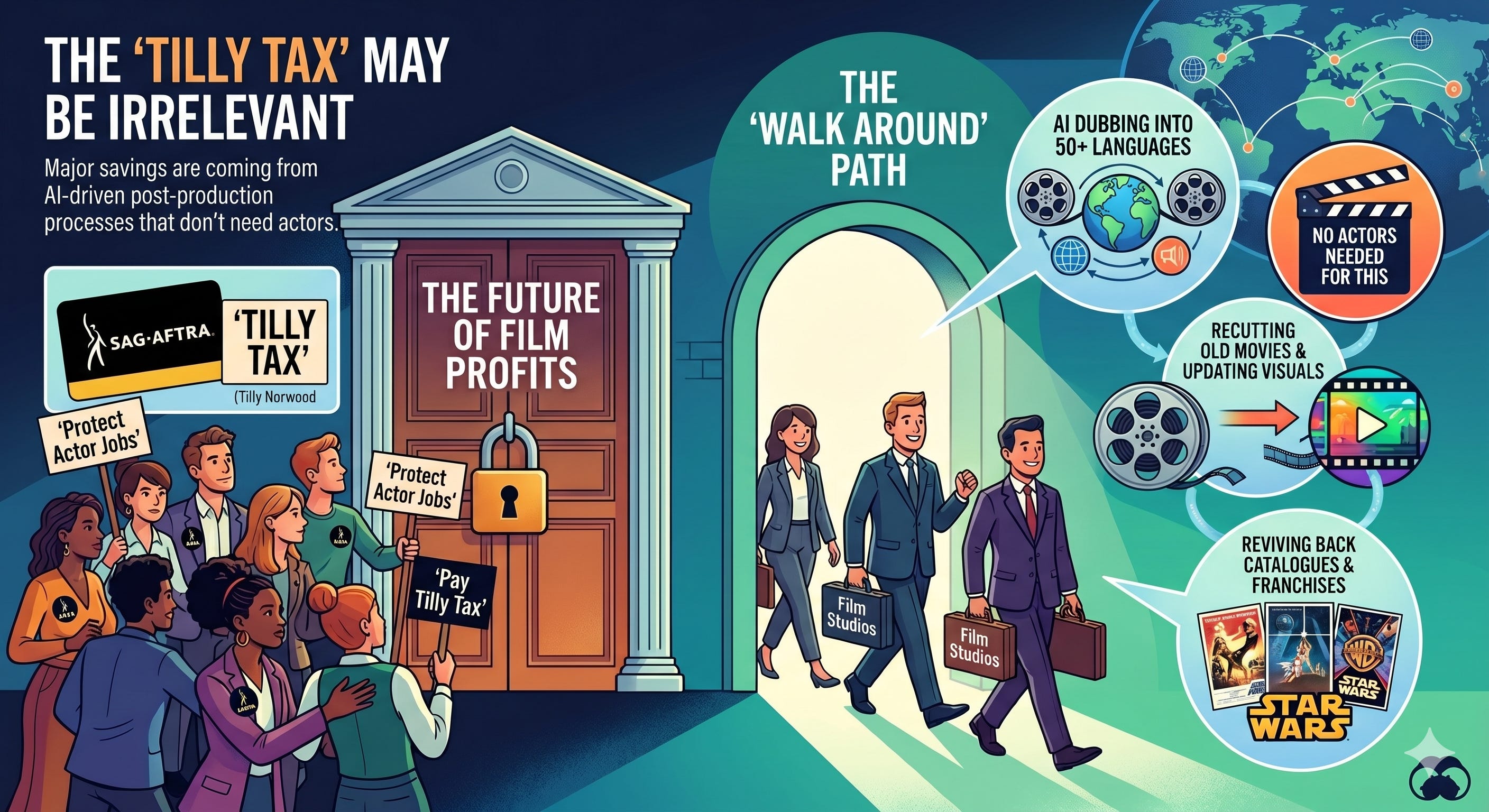
The market reaction both in the media and in my recent conversations with executives is one of surprise— the writers folded easily on the issue of AI after demanding strict terms on its usage only three years ago. All eyes now turn to the AMPTP’s negotiations with the Screen Actor’s Guild (SAG), which will resume on April 27th. SAG has proposed a “Tilly Tax”, a fee named after the “first” AI actor in Hollywood—who I wrote about last October—which studios would have to pay to the union in exchange for using an AI actor.
No one expects SAG to fold as easily around the “Tilly Tax”. But there are lessons to be learned from Bollywood, where Eros Media World recut a 2013 hit movie “Raanjhanaa” over the lead actor’s public objection.