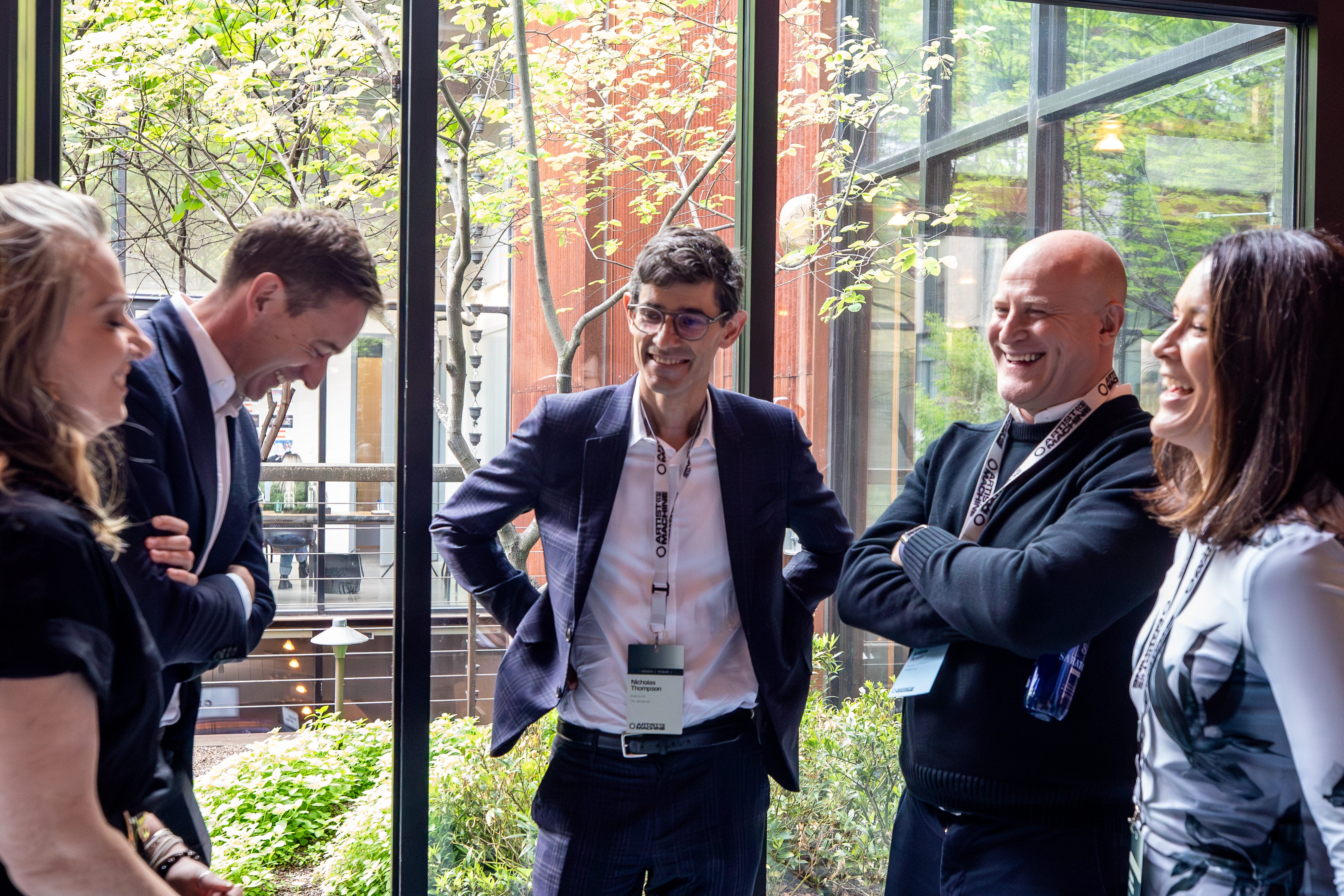
Last week’s Artist and the Machine Summit was terrific. It was impeccably executed with a well-curated crowd.
I spent so much time chatting and meeting new people in the hallways that I missed the talks I had planned to see. At some point it became clear that the speed at which everything is changing is faster than the human imagination. It was a lot of information to process.
Multiple people I spoke with complained of various “bottlenecks”.
The common “bottleneck” was that corporate America cannot move fast enough. That is not always the case—I have heard from multiple AI creators that Netflix is making deals for generative AI shows and movies to be released later in the year. Otherwise, I heard about legal bottlenecks. I also heard various versions of challenges with “market understanding and approval readiness” at the management levels at both Hollywood studios and ad agencies. There is too much friction in the institutional machinery that decides what gets made, cleared and distributed for creators and ad campaigns.
That leaves a gap between what AI can make and what organizations are prepared to greenlight. The business model for AI content in its current phase lives in that gap.
I went into the summit thinking that advertising is the path ahead for certainty. It is objectively the better business model for creators to monetize their content, and brands and agencies are increasingly those creators full-time.
I left the Summit unsure of that conclusion. Here is why.