[Author’s Note: This is going to be an unusually busy week for me with two events, including “THE AI & CREATIVITY SUMMIT: NY 2026” hosted by Artist and The Machine . My plan is to send an essay today and also on Friday. I will also be recording audio interviews at the Summit which I plan to share here.]
Today I want to take a moment to pull and tease out the structure of what I see playing out in the marketplace.
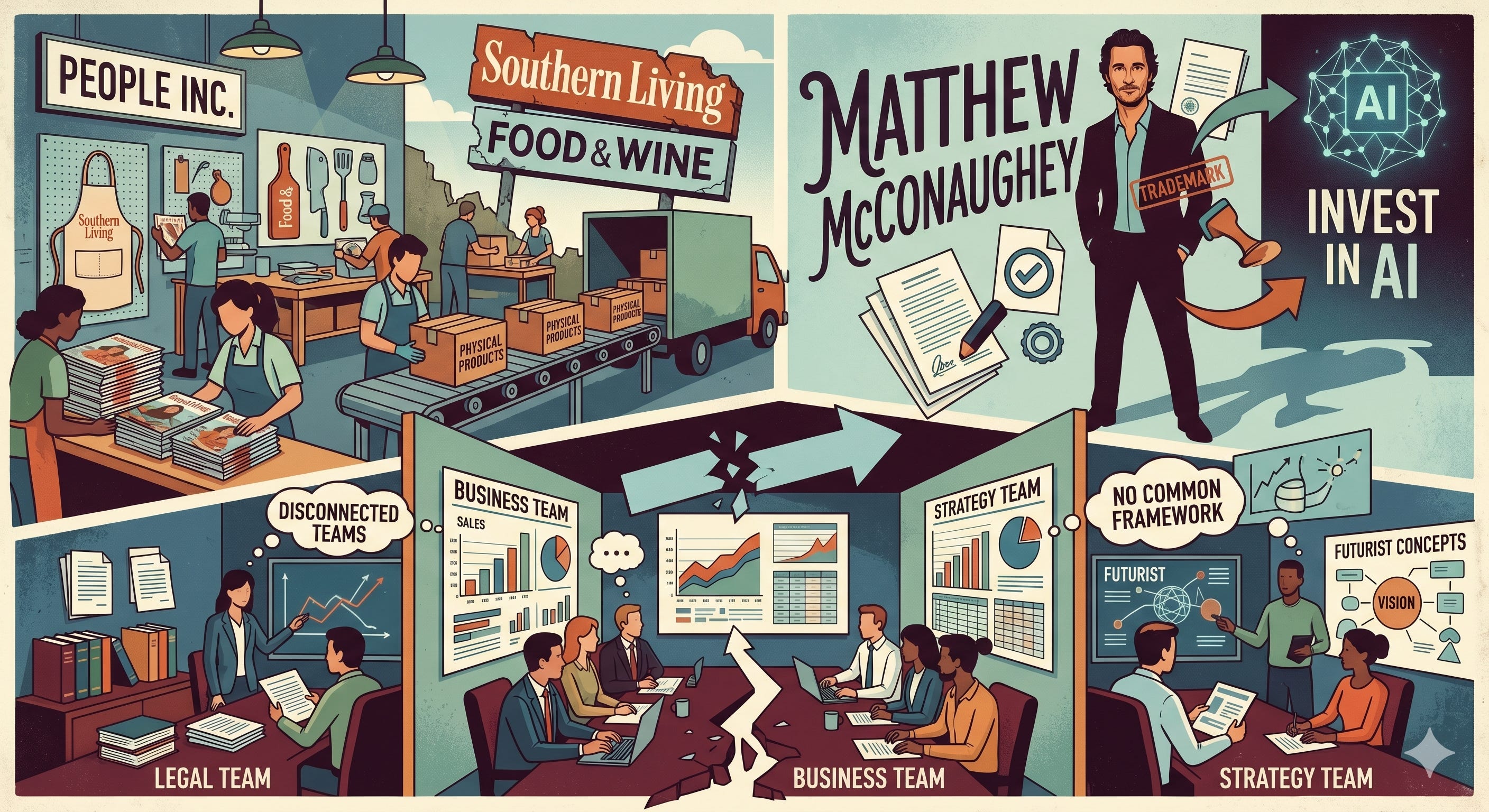
Recent essays focused on People, Inc.’s “INVERSION” and recent technological challenges to celebrity likenesses because they are parts of the same problem: What are the businesses for intellectual property when the medium shifts?
IP holders know they need to act. People, Inc.’s “INVERSION” is the most obvious example of an IP holder taking action. Chairman Barry Diller and newly appointed CEO Neil Vogel have been evangelizing the strategy in interviews and letters to shareholders. Diller’s long track record of success in digital media and Vogel’s success in transforming About.com—a neglected internet hub IAC acquired from the New York Times in 2012—to digital publishing heavyweight DotDash Meredith within less than a decade make them credible strategists.
But both have been quick to acknowledge that brands are dying—Vogel told journalist Peter Kafka “40 of our brands don’t matter, about seven or eight of them matter”—and they both have conceded that many of their bets likely will not work as businesses.
Their message to investors is clear: Management recognizes and understands the uncertainty. They cannot wait around for audiences to rethink how they value People, Inc.’s portfolio of website and magazine brands. They have a strategic need to take action now, even if it involves 200+ bets (according to Diller) and many failures. They can do so because their cash flow is not being disrupted yet.
Last Thursday’s essay argued that the strategy is directionally right given the emerging disruption from AI. However, Diller’s hope that INVERSION will build “a giant company” seems unlikely to be achieved. Even with competitive advantages in digital media like its AI ad platform D/Cipher, the strategy still faces structural uncertainties in the marketplace and emerging competition from small-to-medium-sized businesses. Those uncertainties lie in business affairs, legal, policy, strategy, underwriting, investment and partner-facing teams each evaluating part of the same opportunity while IP law weakens from AI disruption. Without it, there is increasingly less of a common language and decision-making framework.