[Author’s Note: Update on the earnings calls briefs: 32 calls since last month, 64 possible briefs and 20 calls with a brief released, and 25 total briefs released.
Six market patterns across all calls have been identified, to date. Please respond to this email if you are interested in learning more about these briefs and the market pattersn.]
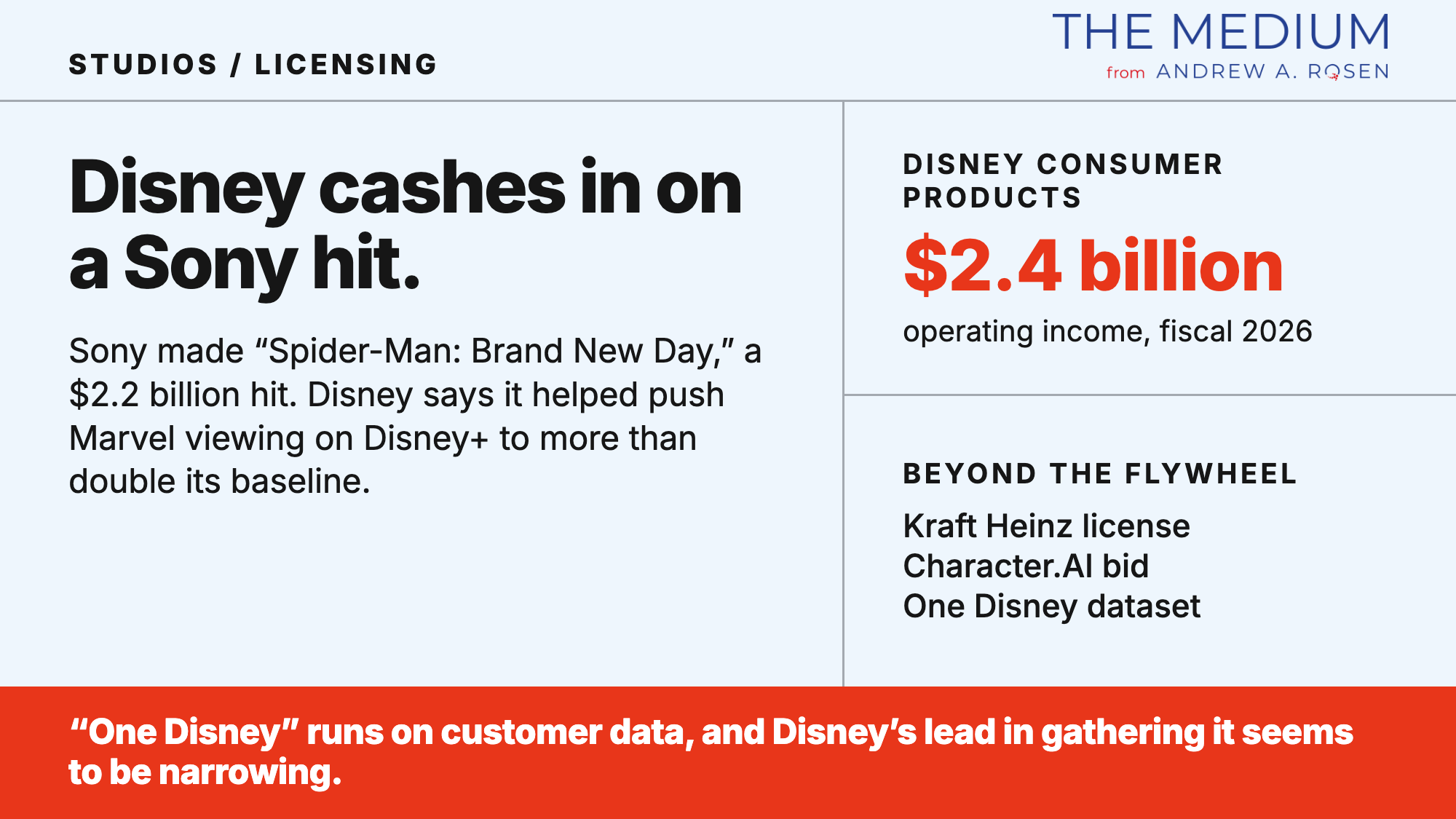
Sony Pictures Entertainment is basking in the global theatrical success of “Spider-Man: Brand New Day” —to the tune of over $2.2 billion. On Disney’s FY Q4 2026 earnings call, CEO Josh D’Amaro credited its success—along with the re-release of “Avengers: Endgame” in late September and the trailer for the upcoming “Avengers: Doomsday”—with pushing viewership of Marvel titles on Disney+ to “more than” double its historic baseline.
He added that the success of “Avengers: Endgame”—which again became the highest-grossing film of all time—extends “across streaming, consumer products, games, social, and at our parks, hotels, and on our cruise ships.” That story was a key part of D’Amaro’s sales pitch to investors about Disney’s “edge” in navigating disruption from changing consumer habits: the ability to identify which parts of the business to defend from disruption and which have room to grow. D’Amaro stated Disney’s answer to finding “growth” lies in “how these businesses connect.”
Over the last year I have argued that, in the face of disruption from AI, brands have more ways to make money from licensed characters than studios do—through products, packaging, retail and media. Disney’s counterargument is that it is both a studio and a brand. The Spider-Man example tests that claim: Sony made the movie, and Disney made money from the character. This earnings call highlighted where Disney’s argument lands and where it falls short.