[Author’s Note: There are seven earnings calls I am scheduled to cover this week. Kraft Heinz (KHC) and Fastly (FSLY) will be the first to be published on Wednesday.
I have screened 21 earnings calls so far—42 possible briefs framed from the perspective of brand and studio executives—and released only 14 briefs, cutting the other 28 because those calls offered nothing a studio or brand licensing executive could use. The no-gos are logged too.
Subscribers are already sending me enthusiastic feedback. If you would like to receive the brief I sent for Coca-Cola’s Q3 earnings call or any other companies—or learn more or be a part of the test, please respond to this mailing.]
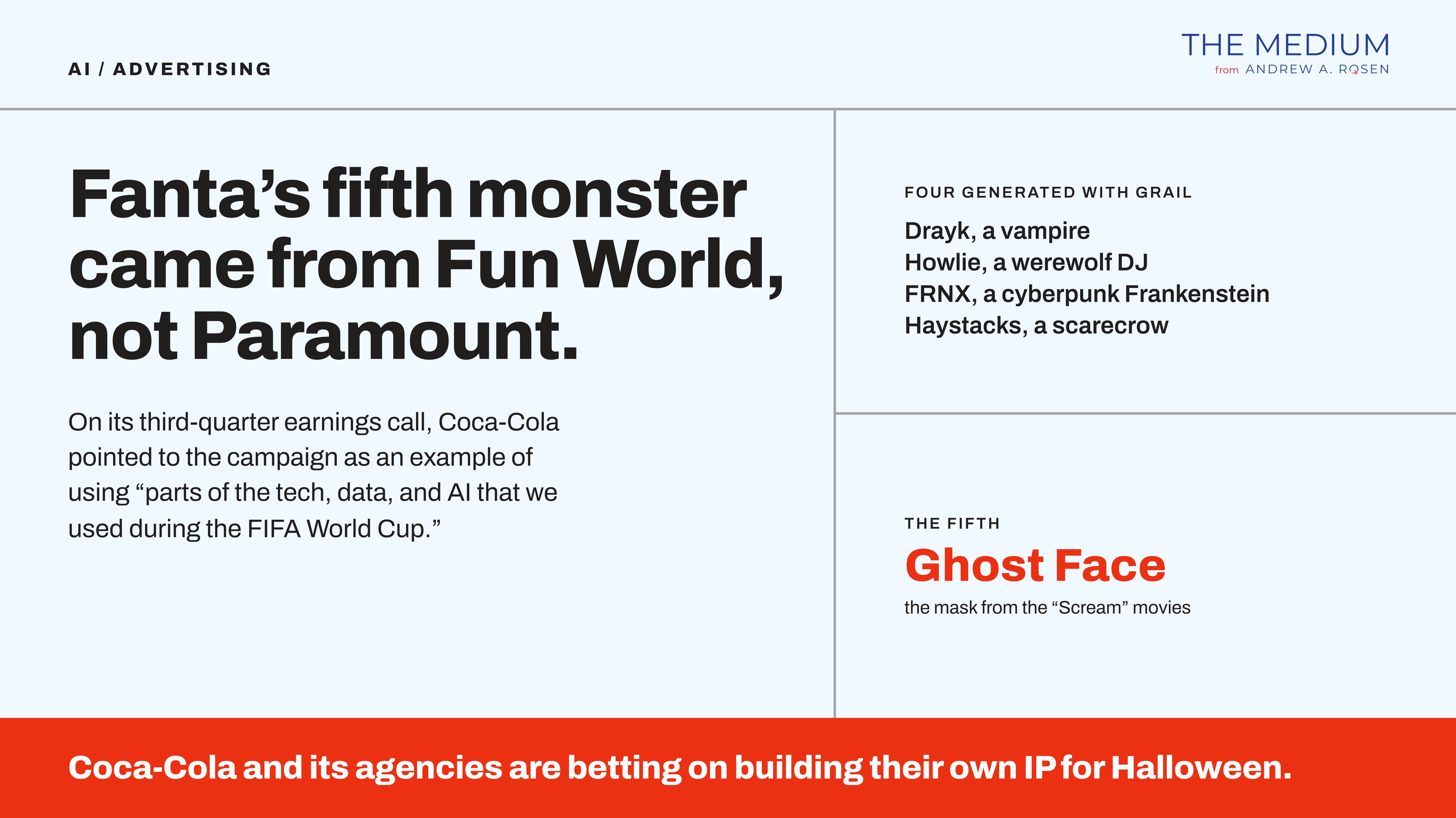
Fanta’s Halloween campaign had five monsters in it. Four were AI-generated original characters made with the help of GRAiL, an entertainment studio: A princely influencer version of a vampire named Drayk (who is the nightlife-loving son of a murdered Dracula), a Werewolf named Howlie who DJs, a cyberpunk Frankenstein named FRNX and a Scarecrow with claws named Haystacks (the company posted videos of them, too).
The fifth was Ghost Face, the mask from the “Scream” movies produced by Paramount and Spyglass studios. Coca-Cola marketed the campaign as “the first horror icon to enter Fanta’s Haunted Universe”—a near-decade-long effort with the objective of “What Christmas is to Coke is what we want Halloween to be for Fanta.”
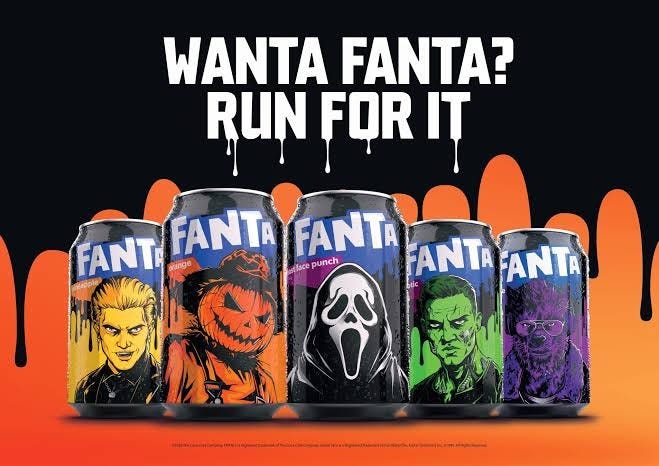
Coca-Cola executives promoted the campaign on its Q3 earnings call as an example of “opportunities to drive more engagement all the way to transactions” by leveraging “parts of the tech, data, and AI that we used during the FIFA World Cup.”
A company with a market capitalization of roughly $400 billion used AI to make its own versions of characters in the public domain. In doing so, it bypassed the studios that own copyrighted versions of those same characters—Universal among them—and generated performance data on how they did. Those studios may infer the campaign’s success from public social media data. They will not see how and where the characters drove awareness, engagement, transactions or brand retention.
There is narrow upside in this story for studio IP holders: Fun World owns the mask—the costume company has made and sold it since the early 1990s—and its license covers Ghost Face in any medium. The voice in Fanta’s video ads belongs to Roger Jackson, who has played the character in all seven “Scream” movies, and those ads promote “Scream” on Paramount+. Roger Jackson’s voice can only appear where there is audio, which is why video promos are the one place a studio tie shows up.
As for the four AI-generated characters, they offer important lesson on how the power to monetize IP is moving toward brands and away from studios.