Last month, I wrote about how Google has taken the lead on regulating AI use of likenesses while every other actor in the market is waiting for someone else to move first. I also have previously an emerging marketplace tension within IP enforcement on digital platforms: “On the one hand, it is piracy and creators are monetizing legacy media IP. On the other hand, it is ‘earned media’ or ‘free publicity.’”
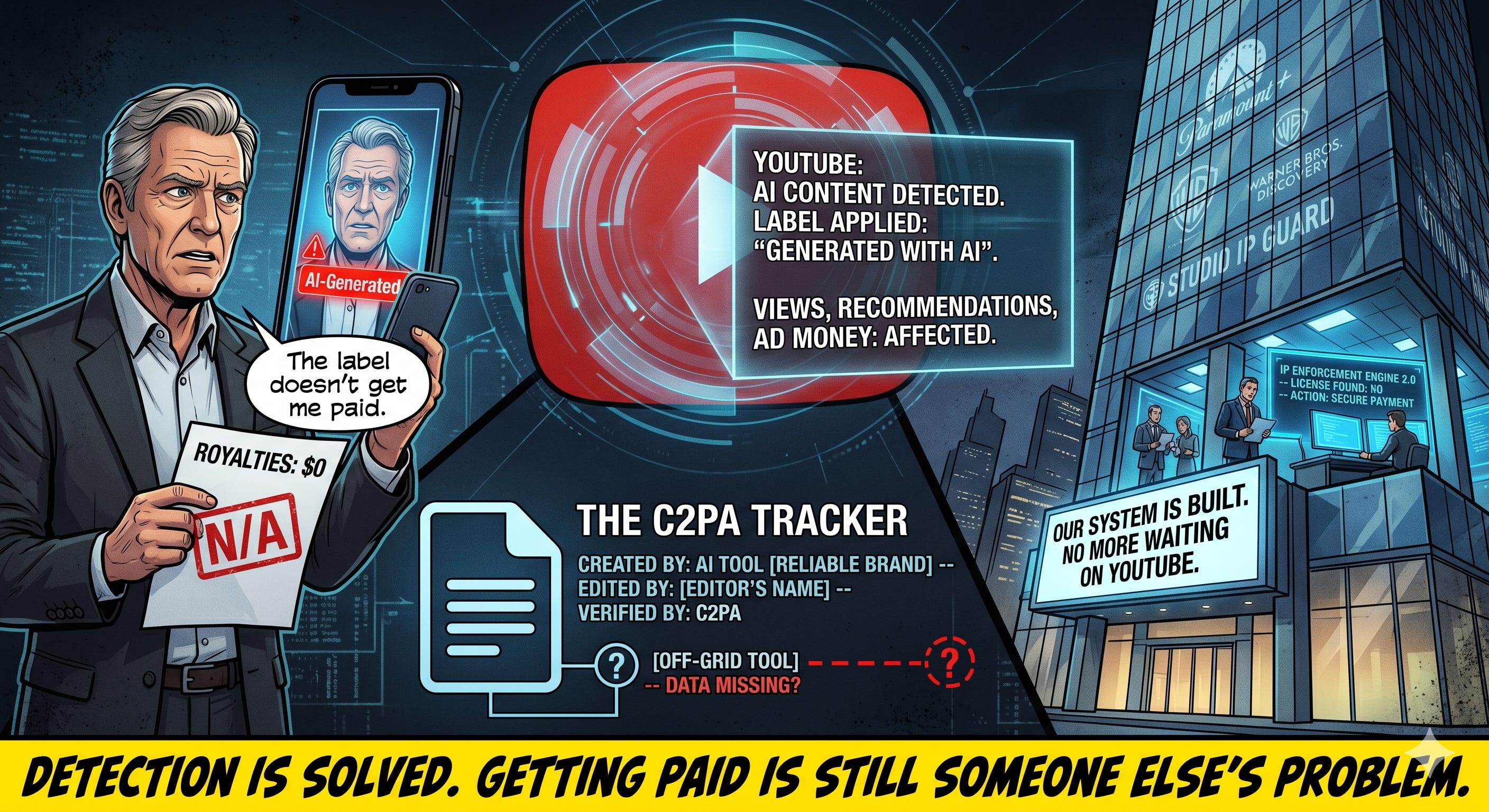
Today, YouTube announced two updates to its disclosure policies for AI content that advance both of these arguments. First, AI disclosure labels move to a more prominent position: below the video player for long-form content and as an overlay for Shorts.
Second, and more significant, YouTube is rolling out automatic AI detection. If a creator does not disclose that they used AI but YouTube’s systems “detect significant photorealistic AI use,” YouTube will now apply the label itself.
It also asserted its market power to regulate AI content via Veo and Google Cloud. It stated disclosures will remain permanent in “a handful of cases”, including:
Content created using YouTube’s own AI tools, like Veo or Dream Screen.
Content containing (the Coalition for Content Provenance and Authenticity (C2PA) metadata—an open standard for content origin and authenticity—indicating they were fully generative AI.
This assertion of regulatory power is the real story.