Last Wednesday, Amazon MGM Studios and Amazon Web Services announced a GenAI Creators Fund at the “AI on the Lot” event in Culver City, California. The fund will “offer filmmakers, digital creators and startups funding and access to Amazon’s AI tools in order to create ‘high-quality cinematic entertainment.’”
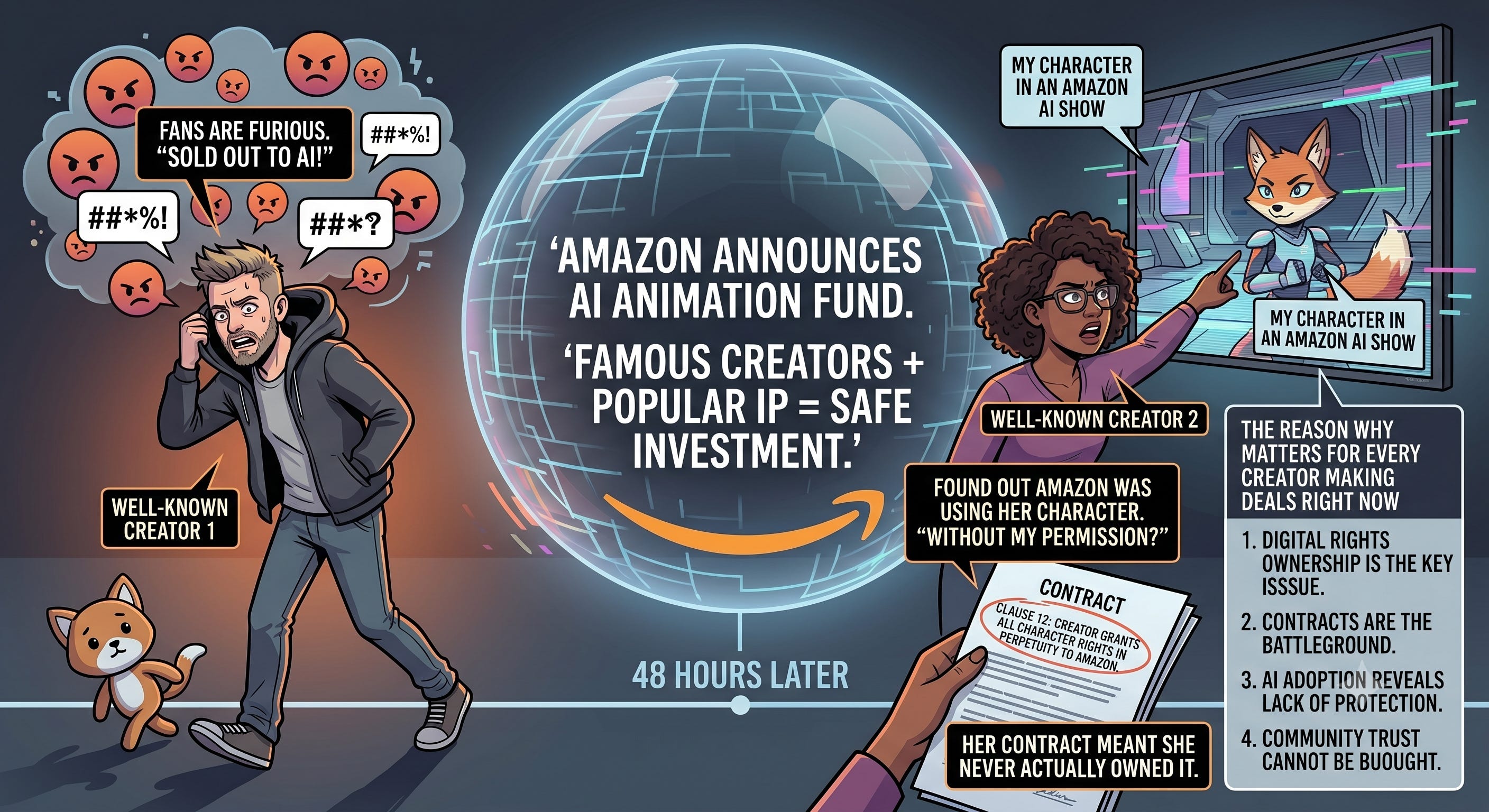
A few greenlit projects were announced, including three original series, one of which was “Punky Duck” from “Maya and the Three” and “The Book of Life” director Jorge Gutierrez. Two days later, Gutierrez announced on X that he had “decided to drop out of the AI program at Amazon” and “will not be making a Punky Duck series”. The impetus was concerns from his community about “using AI to assist an animation pipeline”.
Another of the three was “Cupcake & Friends” from Buzzfeed Studios, which is based on its “Good Advice Cupcake” series starring Loryn Brantz. That same day Brantz responded to the announcement on Instagram: “The news that this character, who is based on my own personality and whom I created as a microphone to spread love and positivity, has been taken and turned into a soulless AI puppet feels like having my intestines pulled out of my body.”
Both stories confirm two of my takeaways from Artist & The Machine’s NY Summit. First, creators are starting to make AI deals—I had heard about Netflix deals but now we see Amazon’s MGM Studios is a player, too—and the first wave of deals is emerging. However, the backlash to Amazon’s announcement suggests we are still very much within the uncertainty of a market coordination failure: Every constituency holds a piece of the picture but no constituency can see the whole board.
Amazon holds a few pieces—a studio, generative tools and the cloud infrastructure to back generative AI content. However, its bet that this market position could succeed in a marketplace suffering from coordination failure now appears to have been partially wrong.
So now what?